3D gameAction RPG (isometric hack and slash)Original by Blizzard Entertainment
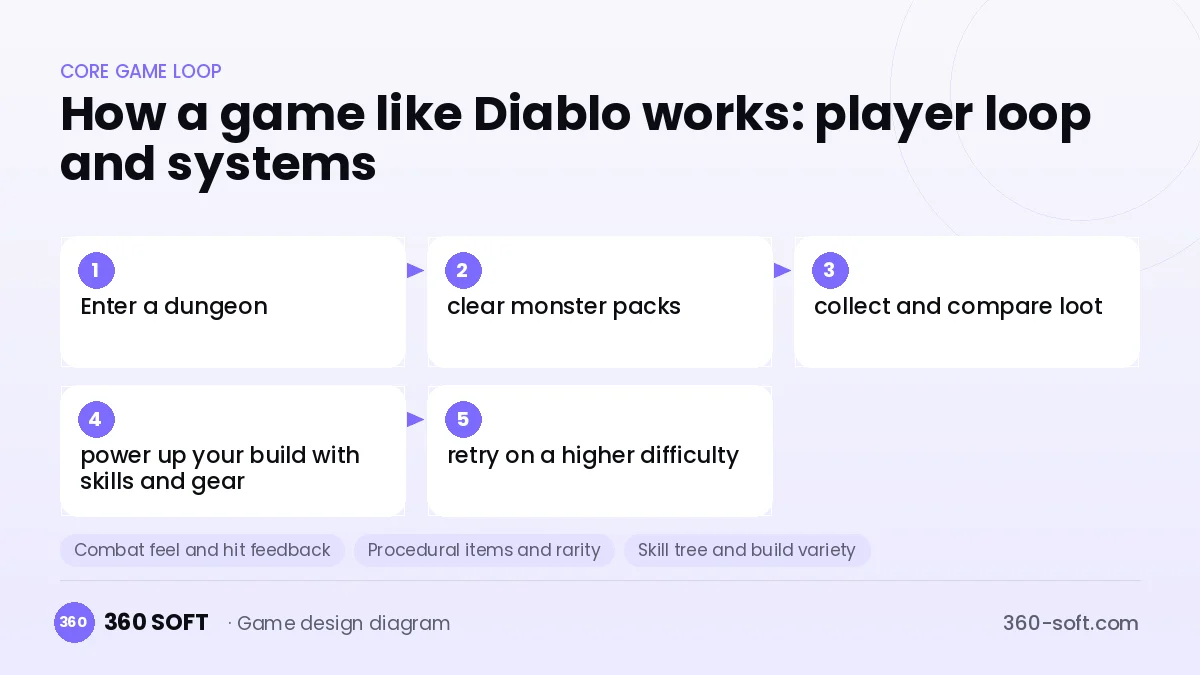
The Diablo series defined the isometric action RPG, the genre players call hack and slash. The formula looks simple but is deeply addictive: you scatter huge monster packs with a few keys, sift through the loot on the floor for a better item, and any rare drop can change how your character plays. Sound, lighting and hit feedback turn every kill into a small reward.
A similar game needs strong combat feel, procedural item generation, skill and build variety, and randomly generated dungeons. A realistic first release has to narrow the scope: three classes, one act with a handful of zones, a random dungeon generator, an item rarity system and a replayable endgame mode. Online co-op can stay optional for the first version.
Why Diablo works: the core loop
Systems you need to build a game like Diablo
Combat feel and hit feedback
Damage numbers, screen shake, light flashes, layered audio and physical enemy reactions. Hard to measure, but this is the single biggest factor in whether the genre works.
Procedural items and rarity
Base items, random affixes, rarity tiers and build-defining legendary powers. The thrill of loot comes from this system.
Skill tree and build variety
Active and passive skills per class, item interactions and synergies. Letting players discover their own builds is what gives the game a long life.
Random dungeon generator
Procedural maps assembled from rooms and modular pieces, with tuned enemy density and elite monster placement. The foundation of replayability.
Difficulty tiers and endgame
Rising difficulty levels, scaling rewards and timed dungeon runs. The loop that keeps players around after the story ends.
Inventory, stash and crafting
Item comparison, storage, salvaging and rerolling affixes. The UI has to make managing thousands of items painless.
What goes into the first version, what comes later
First version (soft launch)
- 3 classes with 12–15 skills each
- One story act, 3–4 zones and a town hub
- Random dungeon generator and elite monsters
- Procedural item system with rarity tiers
- Difficulty tiers and a replayable endgame mode
Later updates
- Online 4-player co-op and matchmaking
- Seasonal characters and season mechanics
- New classes and story acts
- Console release with a gamepad-first UI
The hard parts of this genre
Nailing the combat feel
The same mechanic feels dull if the animation and audio are weak. Combat feel has to be tested early in the prototype and refined through hundreds of small tweaks.
Loot and power balance
Too generous and the excitement fades; too stingy and players burn out. Item budgets and drop rates need tuning through simulation and playtesting.
Hundreds of enemies and effects on screen
Huge packs and exploding effects push performance hard. You need object pooling, GPU instancing and a strict VFX budget.
Team, timeline and budget
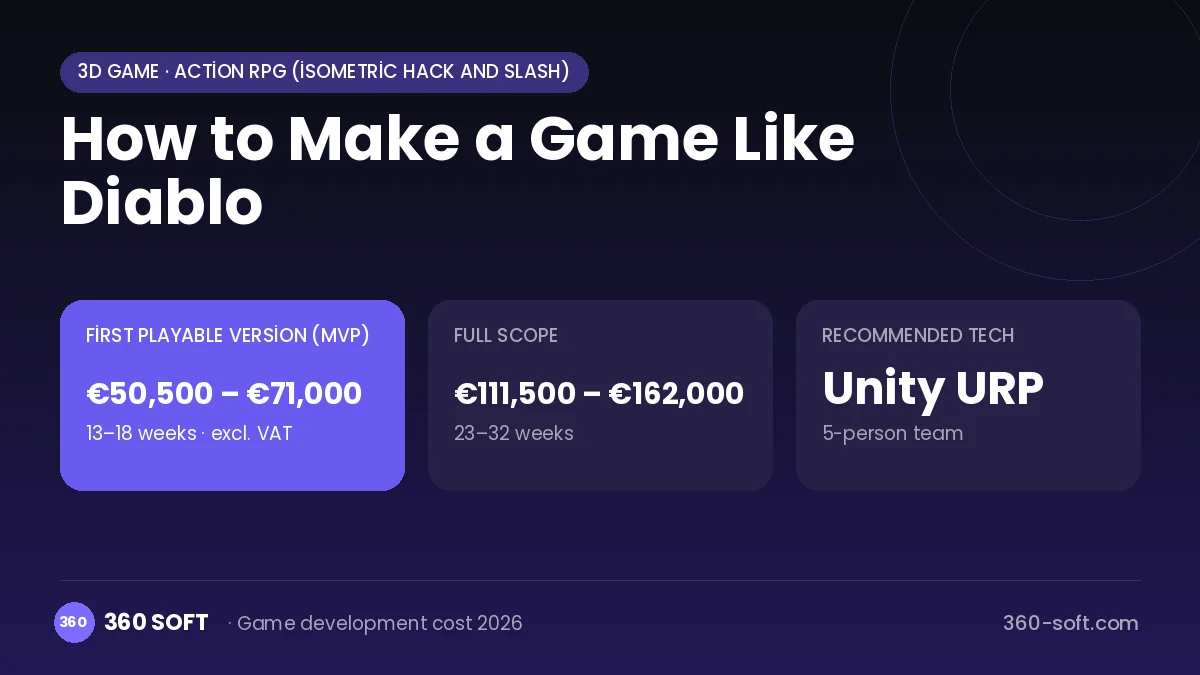
The estimate is based on the genre’s core systems, content volume, multiplayer and live-ops needs plus QA and project management: about 428 person-days for the full scope and 192 person-days for the first version. Cutting scope (fewer levels, one map, fewer characters) lowers the budget directly. Store accounts, servers, audio licences and user-acquisition budget are separate items. We send a fixed written price within 24 hours after the game design document.
Monetisation
The healthiest model in this genre is a premium sale, followed by expansions and a cosmetic store. A seasonal battle pass with free and paid tiers can add long-term revenue. Selling power or loot draws a fierce backlash from this audience, so everything you sell should be cosmetic.
Estimate your game budget and get a fixed quote
Let us scope it together and send a fixed written quote within 24 hours. NDA on request; you own the source code.
Calculated instantly from your choices, excl. VAT. A fixed written quote follows a free scoping call within 24 hours.
Choosing a game development company for a game like Diablo
Most people searching “make a game like diablo” are really looking for a reliable game development company. When comparing quotes, check four things:
- Can you play their released 3D games on your own phone?
- Are the source code, art files and store accounts transferred to you by contract?
- Do they build a playable prototype first and show a demo every two weeks?
- Are ads, in-app purchases and analytics set up as part of the quote?
Copyright and originality
Game mechanics on their own are generally not protected, but names, logos, characters, art, audio and level designs are. That is why we build a game “like Diablo” with your own name, art and world. This is not legal advice; we recommend a trademark search before launch.
Frequently asked questions
How long does it take to make a game like Diablo?
A single-player action RPG with three classes, one act and random dungeons is a reachable goal for a small team. Online co-op and a season system extend the timeline noticeably.
Will I run into copyright issues?
Mechanics such as isometric action RPG combat, loot rarity and skill trees are generally free to use. The world, characters, names, art and audio cannot be copied. This is not legal advice.
Which engine should I use?
Unity URP is flexible for mobile and PC, while Unreal Engine 5 shines for a darker, more cinematic look. What really matters is the VFX pipeline, pooling and procedural dungeon tooling.
What should I look for in a studio to build an action RPG?
Look for a portfolio of action games with strong combat feel and good VFX work. A team that can explain how it will balance the loot economy is the right partner for this genre.