2D gameSurveillance-based horrorOriginal by Scott Cawthon
Five Nights at Freddy's locks the player in a single room armed only with security cameras, doors and lights. The tension between tracking animatronics that move through the night, rationing limited power and shutting the door at the right moment explodes in jumpscare moments. The game's mysterious backstory has turned its clue-filled world into a puzzle the community has spent years trying to solve.
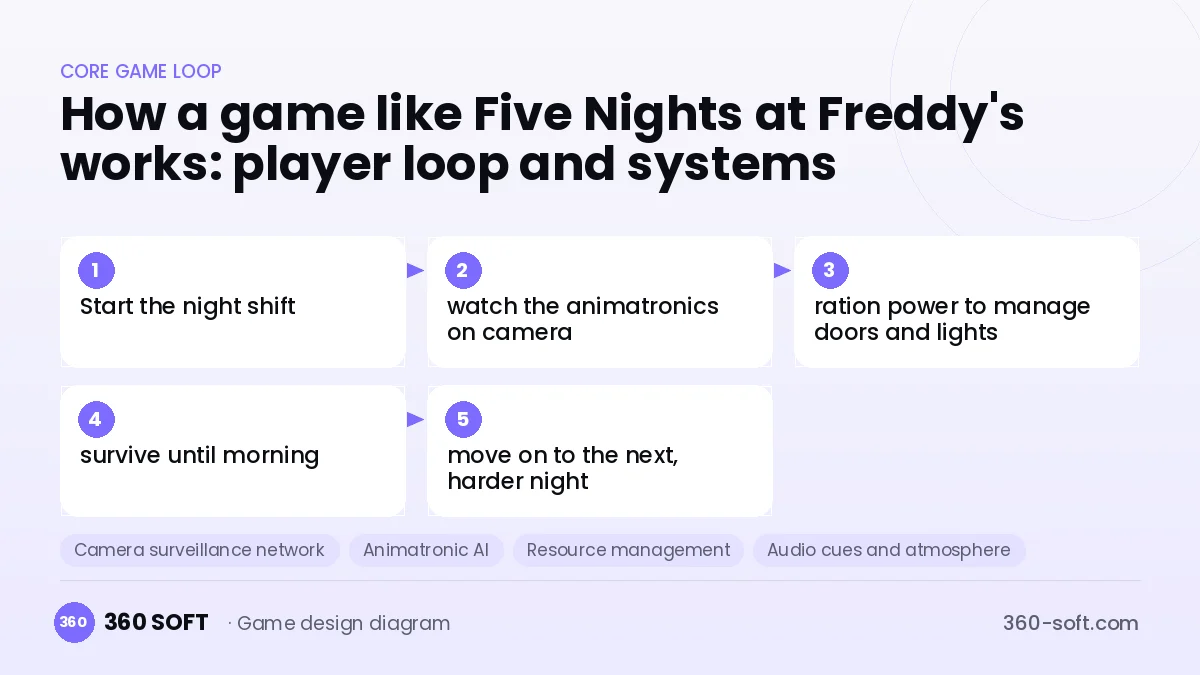
The three core systems of a similar game are a camera network, animatronic movement AI and resource management. Each enemy advancing with its own routes and rules, aggression rising as the night goes on and players reading audio cues form the heart of the design. Camera feeds built from pre-rendered 3D images, sound design and carefully scattered story clues create the genre's atmosphere.
Why Five Nights at Freddy's works: the core loop
Systems you need to build a game like Five Nights at Freddy's
Camera surveillance network
Feed system for switching between rooms, with noise and distortion effects, showing enemy positions on each camera.
Animatronic AI
Behaviour model where each enemy advances with its own route, movement chance and attack conditions based on the night and difficulty.
Resource management
System where using doors, lights and cameras drains limited power, forcing players to weigh risk constantly.
Audio cues and atmosphere
Positional sound design with footsteps, breathing and mechanical noises that hint an enemy is approaching.
Jumpscare management
Animation and sound triggers that time the attack, keep it unpredictable and stop it losing impact through repetition.
Story clues and secrets
Hidden narrative layer spread through phone messages, newspaper clippings and minigames, fuelling community discussion.
What goes into the first version, what comes later
First version (soft launch)
- Camera network and office interactions
- 3–4 animatronics with different behaviours
- Power management and a five-night campaign
- Sound design and jumpscare animations
- Basic story clues via phone messages
Later updates
- Custom night mode with enemy difficulty settings
- Hidden minigames and alternative endings
- New locations and sequel chapters
- Mobile and console ports
The hard parts of this genre
Fair fear
If enemy behaviour is fully random the game feels unfair, and if too predictable it stops being scary; the right probability balance is critical.
Building atmosphere
Creating strong tension with few mechanics requires skilful use of light, sound and image distortion.
Story and community
The genre's staying power depends on a mysterious narrative; distributing clues consistently and discoverably takes careful planning.
Team, timeline and budget
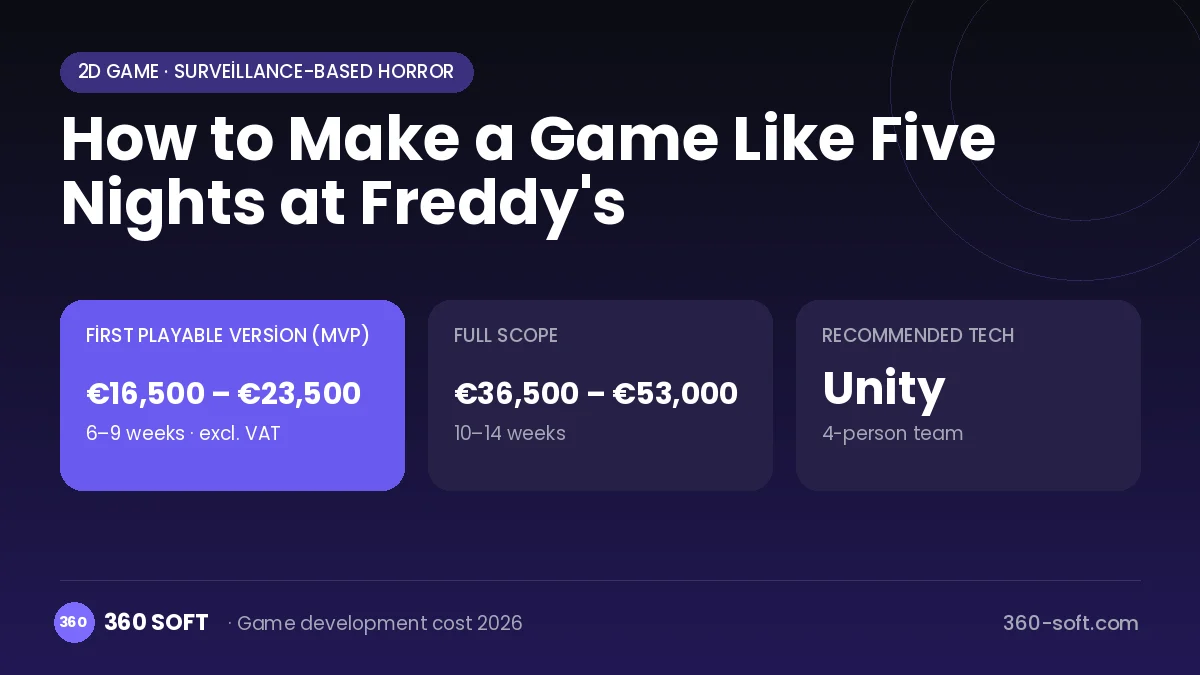
The estimate is based on the genre’s core systems, content volume, multiplayer and live-ops needs plus QA and project management: about 139 person-days for the full scope and 62 person-days for the first version. Cutting scope (fewer levels, one map, fewer characters) lowers the budget directly. Store accounts, servers, audio licences and user-acquisition budget are separate items. We send a fixed written price within 24 hours after the game design document.
Monetisation
The most common model in this genre is a low-priced premium release on PC and mobile; quickly released sequels and chapters keep the community engaged. Content creators playing and sharing the game provide strong organic marketing. Once the characters catch on, merchandise and licensing can become a major revenue stream.
Estimate your game budget and get a fixed quote
Let us scope it together and send a fixed written quote within 24 hours. NDA on request; you own the source code.
Calculated instantly from your choices, excl. VAT. A fixed written quote follows a free scoping call within 24 hours.
Choosing a game development company for a game like Five Nights at Freddy's
Most people searching “make a game like five nights at freddy's” are really looking for a reliable game development company. When comparing quotes, check four things:
- Can you play their released 2D games on your own phone?
- Are the source code, art files and store accounts transferred to you by contract?
- Do they build a playable prototype first and show a demo every two weeks?
- Are ads, in-app purchases and analytics set up as part of the quote?
Copyright and originality
Game mechanics on their own are generally not protected, but names, logos, characters, art, audio and level designs are. That is why we build a game “like Five Nights at Freddy's” with your own name, art and world. This is not legal advice; we recommend a trademark search before launch.
Frequently asked questions
How long does it take to make a game like Five Nights at Freddy's?
Because the mechanic set is simple, a playable version can be ready in a few weeks. Polishing the atmosphere, visuals and sound design is what really extends the timeline.
Will a game similar to FNAF cause copyright problems?
Horror mechanics based on camera surveillance and resource management are generally free to use. The animatronic characters, names, locations, story and sounds cannot be copied; you need to create your own characters and world. This is not legal advice.
Can it be made on a small budget?
Yes, this is one of the best formats for low-budget horror games. A large share of the budget should go into visual and audio quality.
What should I look for when choosing a horror game studio?
Ask about the studio's experience with atmosphere, sound design and tuning enemy behaviour. Playing their previous horror projects yourself is the best way to judge.