3D gamePhysics-based kitchen simulationOriginal by Big Cheese Studio
Cooking Simulator turns the kitchen into a playground governed by physics. Players actually chop ingredients, put them in the pan, adjust the hob's heat and sprinkle spices by hand; overcook the dish and it burns, overdo the salt and the score drops. This tactile and sometimes chaotic experience combines the real joy of cooking with the comic moments of dropped plates.
What a similar game needs is ingredient and cooking simulation: a sliceable mesh for each ingredient, doneness and temperature tracking, stations such as hob, oven and fryer, recipe validation and presentation scoring. On top of that come an order flow, restaurant progression, and new equipment and recipe unlocks. Control over physics interaction must be designed carefully; players should love the chaos, not get annoyed at clumsiness.
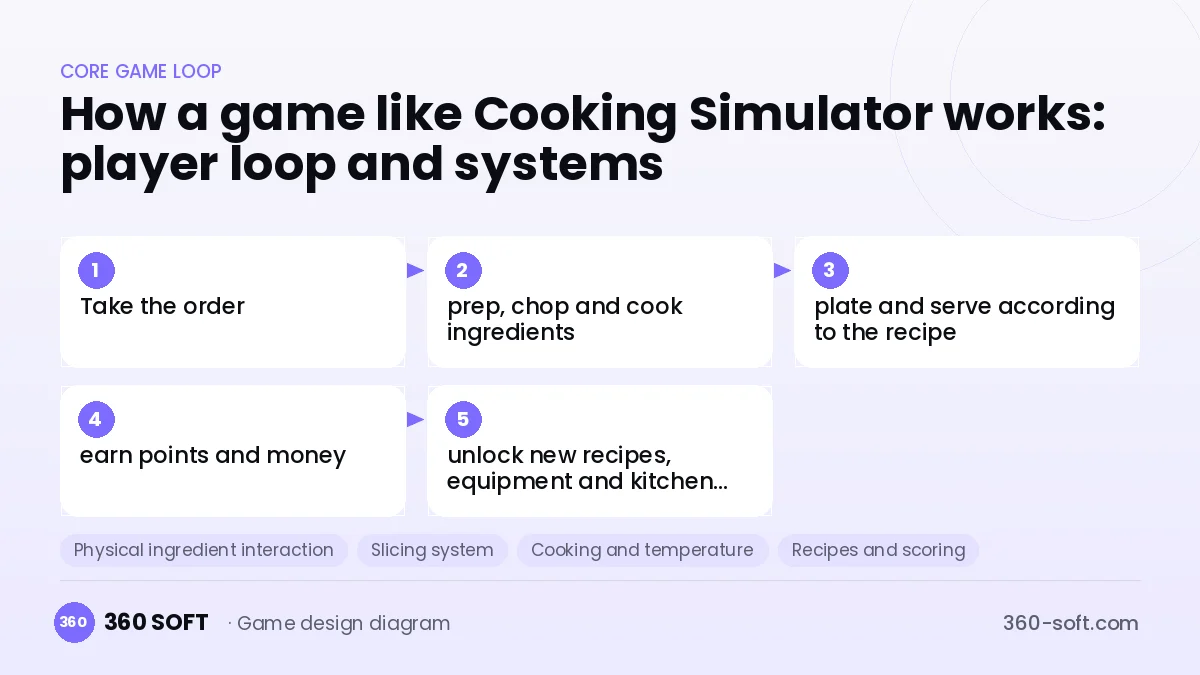
Why Cooking Simulator works: the core loop
Systems you need to build a game like Cooking Simulator
Physical ingredient interaction
Grabbing, throwing, chopping and placing ingredients into containers; stable, controllable behaviour of physics objects.
Slicing system
Real-time cutting of vegetables and meat or pre-made slice variants; a hybrid solution is preferred for performance.
Cooking and temperature
Raw, cooked and burnt states for each ingredient; colour and texture changes driven by heat and time.
Recipes and scoring
Recipe validation based on ingredients, quantity, doneness and seasoning; presentation and time scores.
Order and service flow
Incoming orders, waiting times, customer satisfaction and daily goals.
Career and kitchen progression
New recipes, equipment and kitchen decoration; increasingly demanding rush hours as you progress.
What goes into the first version, what comes later
First version (soft launch)
- One kitchen with 4–5 cooking stations
- 20–25 recipes and around 40 ingredients
- Chopping, doneness and seasoning system
- Order flow and recipe-based scoring
- Career progression and a free (sandbox) mode
Later updates
- New kitchen themes and world cuisine recipe packs
- Online co-op kitchen
- Special equipment modes such as pastry/desserts and grill
- VR support and console ports
The hard parts of this genre
Controlling physics
Overly realistic physics leads players to drop ingredients and get frustrated. Grab assists, snap zones and subtle gravity tricks are needed.
Ingredient count and state variants
Every ingredient needs raw/cooked/burnt/sliced variants. Content cost can be reduced with shader-based cooking effects.
Performance
A kitchen holds many physics objects and liquid effects at once. Sleeping physics bodies and object limits must be defined.
Team, timeline and budget
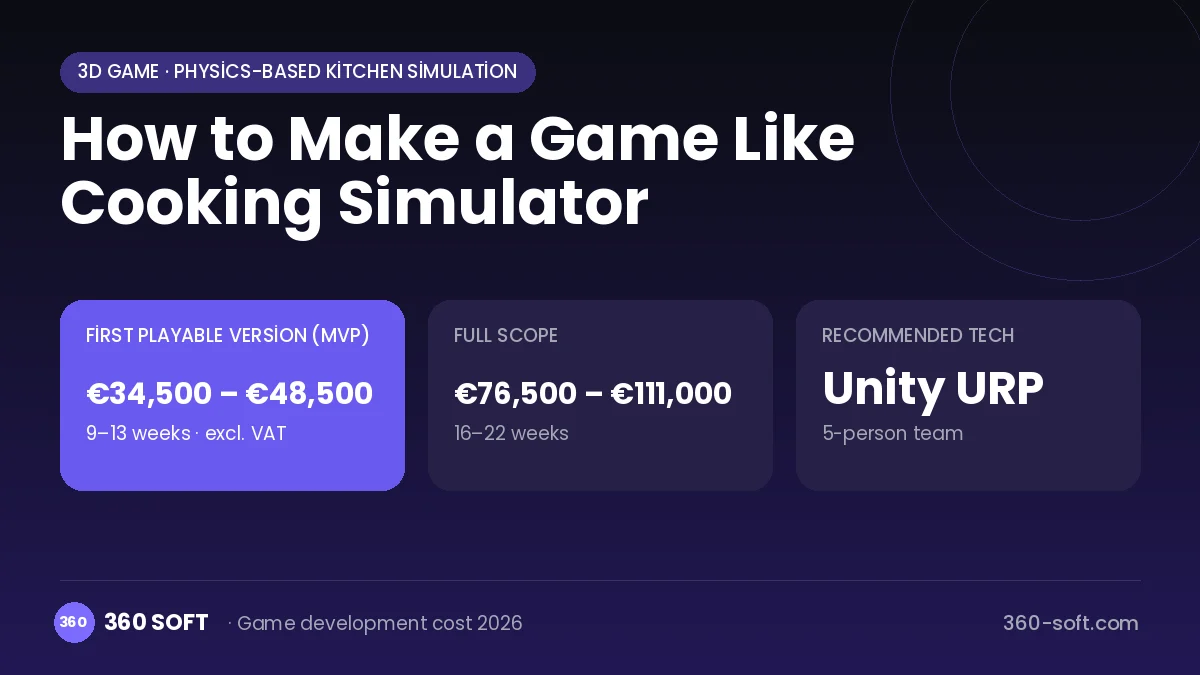
The estimate is based on the genre’s core systems, content volume, multiplayer and live-ops needs plus QA and project management: about 293 person-days for the full scope and 132 person-days for the first version. Cutting scope (fewer levels, one map, fewer characters) lowers the budget directly. Store accounts, servers, audio licences and user-acquisition budget are separate items. We send a fixed written price within 24 hours after the game design document.
Monetisation
On PC and console, a one-time purchase followed by themed recipe and kitchen DLC is the best model for this genre. A VR version can be sold as a separate product. On mobile, a version with simplified physics interaction, free-to-play with ad-based speed-ups and recipe pack IAPs could be considered.
Estimate your game budget and get a fixed quote
Let us scope it together and send a fixed written quote within 24 hours. NDA on request; you own the source code.
Calculated instantly from your choices, excl. VAT. A fixed written quote follows a free scoping call within 24 hours.
Choosing a game development company for a game like Cooking Simulator
Most people searching “make a game like cooking simulator” are really looking for a reliable game development company. When comparing quotes, check four things:
- Can you play their released 3D games on your own phone?
- Are the source code, art files and store accounts transferred to you by contract?
- Do they build a playable prototype first and show a demo every two weeks?
- Are ads, in-app purchases and analytics set up as part of the quote?
Copyright and originality
Game mechanics on their own are generally not protected, but names, logos, characters, art, audio and level designs are. That is why we build a game “like Cooking Simulator” with your own name, art and world. This is not legal advice; we recommend a trademark search before launch.
Frequently asked questions
How long does it take to make a game like Cooking Simulator?
A playable version with one kitchen and a limited set of recipes is an achievable goal for a small team. Physics tuning and ingredient variants take up most of the time.
Will there be copyright issues?
Cooking simulation mechanics are generally free to use. The game name, UI, kitchen design and artwork cannot be copied, and real food and equipment brands should not be used without permission. This is not legal advice.
Is it suitable for VR?
Hand-grab and chopping mechanics are a great fit for VR. However, a VR version needs separate design and testing for controls and comfort.
What should I look for when choosing a studio to build a game like Cooking Simulator?
Look for a team experienced in physics-based interaction and shader effects. They should be able to present a plan linking ingredient and recipe counts to production cost.