3D gameIsometric action-adventure and explorationOriginal by Isometricorp Games / Finji
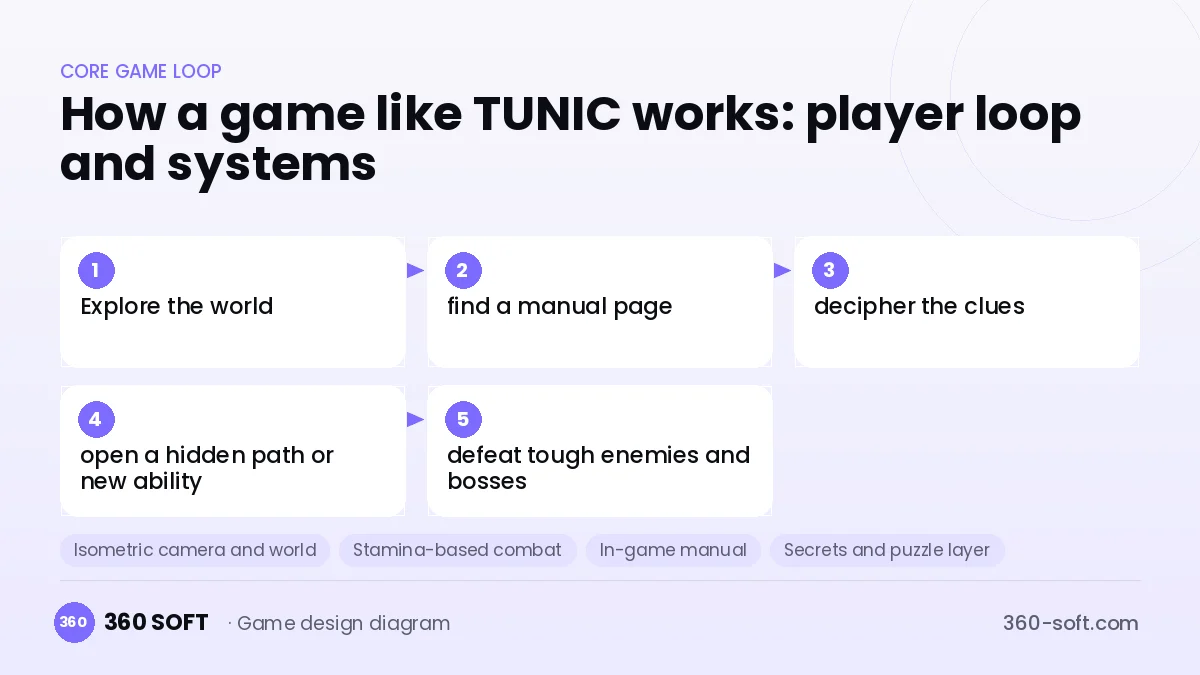
Beneath the cute look of a little fox setting out on an adventure in an isometric world, TUNIC hides tough combat and a deep web of secrets. Its most original feature is an in-game instruction manual made of pages found in the world, most of it written in an unreadable language. Players work out the rules, maps and hidden paths for themselves by deciphering these pages; the moment of understanding is the reward itself.
A similar game needs an isometric 3D world with a locked camera, a combat system built on shields, dodging and stamina, regions packed with hidden passages, and a manual system that unlocks gradually. Every secret has to be tied together by consistent puzzle design. The low-poly but strongly lit art style also calls for careful visual direction.
Why TUNIC works: the core loop
Systems you need to build a game like TUNIC
Isometric camera and world
A 3D map with a fixed-angle camera that enables hidden paths and perspective tricks, with regions linked by shortcuts.
Stamina-based combat
Action combat built on shields, rolling, lock-on and a stamina bar, centred on learning enemy patterns.
In-game manual
A page system collected in the world, reminiscent of old game manuals, containing hints, maps and cryptic text.
Secrets and puzzle layer
Consistent clue design for invisible paths, hidden entrances and large puzzles that go unnoticed until the very end.
Items and upgrades
Progression that boosts health, stamina and magic with collected items, letting players partly choose the order of upgrades.
Accessibility settings
Optional settings that soften tough fights, a menu that opens the story and exploration to every player.
What goes into the first version, what comes later
First version (soft launch)
- Isometric camera, movement and core combat
- Two regions and one boss
- The first pages of the manual system
- A few hidden paths and shortcut unlocks
- Save points and health regeneration
Later updates
- New regions and a meta-puzzle layer
- Additional weapons and spells
- Accessibility and difficulty options
- Console versions and localisation
The hard parts of this genre
Designing secrets
Clues must be neither too obvious nor impossible to crack; that balance can only be measured with playtesters who do not know the game.
Producing the manual
The pages are both artwork and a source of information; keeping their content up to date as the game changes takes serious coordination.
Combat difficulty
The cute look attracts a broad audience but the combat is hard; difficulty options should be considered part of the design from the start.
Team, timeline and budget
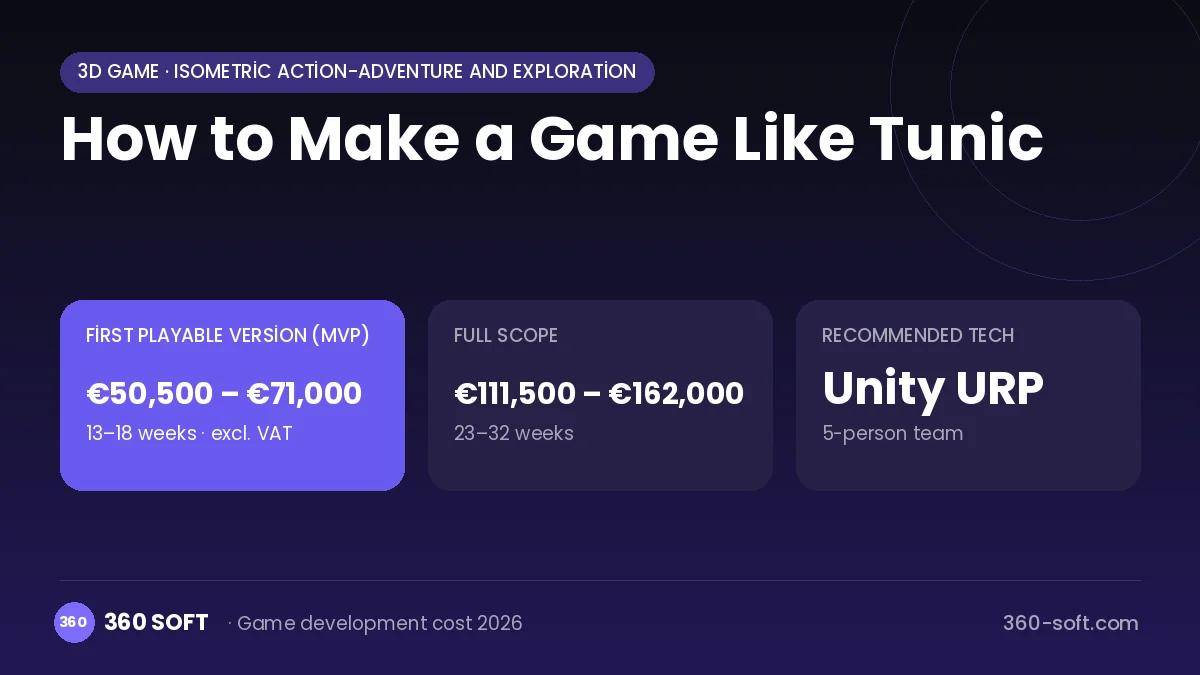
The estimate is based on the genre’s core systems, content volume, multiplayer and live-ops needs plus QA and project management: about 428 person-days for the full scope and 192 person-days for the first version. Cutting scope (fewer levels, one map, fewer characters) lowers the budget directly. Store accounts, servers, audio licences and user-acquisition budget are separate items. We send a fixed written price within 24 hours after the game design document.
Monetisation
Exploration-led action-adventures earn through premium sales on PC and console. Extras such as a soundtrack album, digital art book and physical collector's editions are natural revenue sources for a loyal, curious audience. Deals with subscription services can also boost visibility.
Estimate your game budget and get a fixed quote
Let us scope it together and send a fixed written quote within 24 hours. NDA on request; you own the source code.
Calculated instantly from your choices, excl. VAT. A fixed written quote follows a free scoping call within 24 hours.
Choosing a game development company for a game like TUNIC
Most people searching “make a game like tunic” are really looking for a reliable game development company. When comparing quotes, check four things:
- Can you play their released 3D games on your own phone?
- Are the source code, art files and store accounts transferred to you by contract?
- Do they build a playable prototype first and show a demo every two weeks?
- Are ads, in-app purchases and analytics set up as part of the quote?
Copyright and originality
Game mechanics on their own are generally not protected, but names, logos, characters, art, audio and level designs are. That is why we build a game “like TUNIC” with your own name, art and world. This is not legal advice; we recommend a trademark search before launch.
Frequently asked questions
How long does it take to make a game like Tunic?
Even if the world looks small, designing the secrets and the manual consistently takes a great deal of iteration. A vertical slice starting with combat and one region shows early on whether the idea works.
Will there be copyright issues?
Isometric action-adventure and the idea of an in-game manual are generally free to use. The fox character, invented alphabet, manual pages, map layout and music cannot be copied. This is not legal advice.
Can a solo developer or small team make it?
Games in this style can be made by small teams over a long development cycle. However, you need programming, 3D art, audio and puzzle design skills all together.
What should we look for when choosing a studio to build a game like Tunic?
Review the studio's samples of action combat feel and exploration-driven level design. Also ask how often they playtest, and with which players.