In fish farming the biggest cost is feed, and feed conversion varies with water temperature, oxygen level and fish size. When the number of fish and average weight in each cage are known only by estimate, feeding is either too much or too little and the harvest plan is full of surprises. In the system we build, every cage or pond is tracked as a stock batch, and feeding, mortality, sample weighing and grading are entered from the field. A feed recommendation is produced from the temperature and dissolved oxygen readings of the sensors, and the estimated biomass lets you see the harvest and sales plan together.
Problems we see on fish farms
- Cage biomass based on guesswork
- Feeding not adjusted to water conditions
- Mortality and disease records scattered around
- Harvest and sales planning left to the last minute
Modules
Cage and batch
Fingerling intake, species, number, average weight and cage transfers.
Feeding
Daily feed amount, feed type and feed table recommendation by water temperature.
Water quality
Temperature, oxygen and salinity sensors with critical value alarms.
Growth and FCR
Sample weighings, growth curve and feed conversion ratio.
Health and mortality
Mortality counts, disease observations, vaccination and treatment records.
Harvest plan
Harvest by size distribution, dispatch to the processing plant and sales orders.
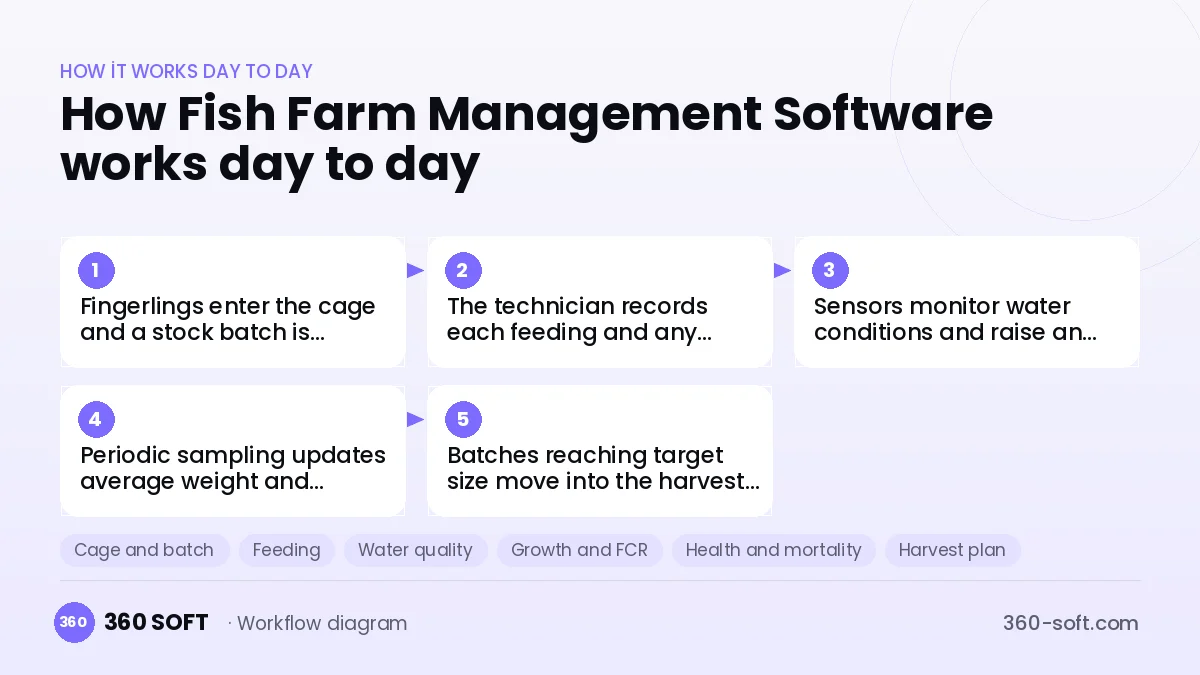
How it works day to day
- 1
Fingerlings enter the cage and a stock batch is opened.
- 2
The technician records each feeding and any mortality from the field.
- 3
Sensors monitor water conditions and raise an alarm on low oxygen.
- 4
Periodic sampling updates average weight and biomass.
- 5
Batches reaching target size move into the harvest plan and sales.
Integrations
Off-the-shelf software or custom-built?
When off-the-shelf is enough
For a small single-pond trout farm, a simple stock and feed record sheet may be enough.
When custom software pays off
On farms with dozens of cages and export links, a custom system joining biomass, feed and water quality directly lowers feed cost and losses.
How the budget is built
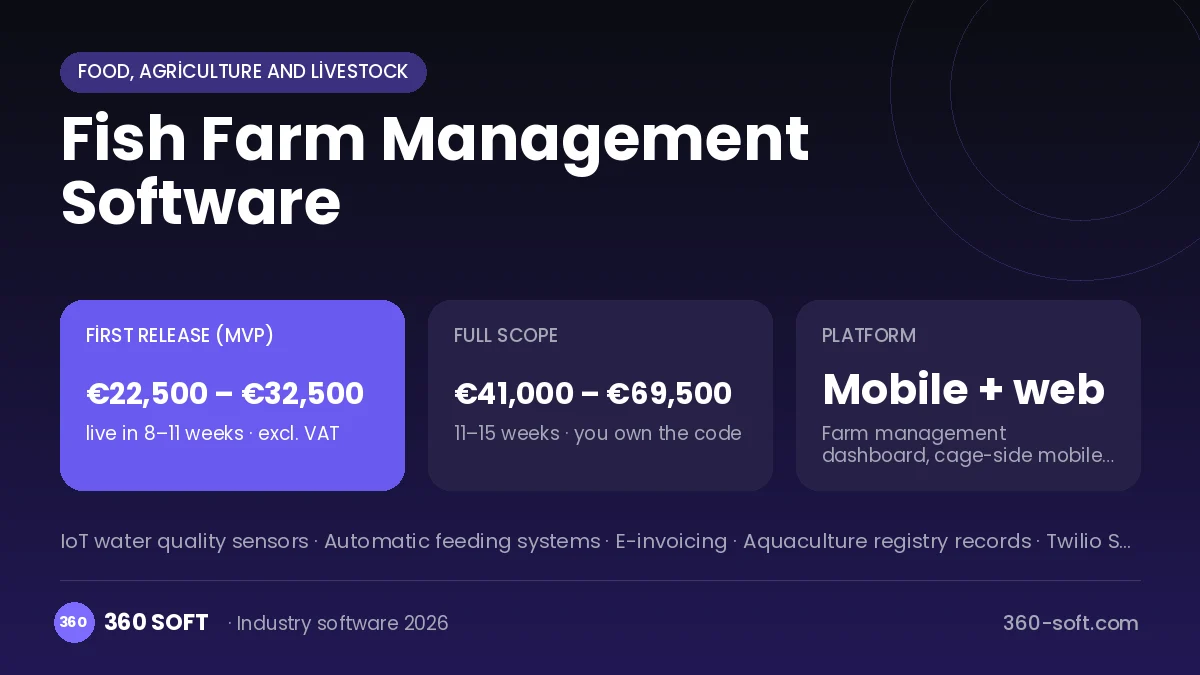
We launch the workflow that saves you the most time first, then add modules based on real usage. The full scope below is calculated with 18 screens and 9 modules; the final price follows a free discovery call and a written scope.
Maintenance and improvements (optional): €550 / month. Hosting, SMS, WhatsApp and app store fees are listed separately.
Frequently asked questions
How is data entered from cages at sea?
Technicians enter data by phone on the boat or platform, and records are stored offline where there is no coverage.
Can our existing sensors be connected?
Readings are taken from oxygen and temperature meters that offer a data output, and a sensor is recommended where they do not.
Can the feed table be changed to suit our supplier?
Yes. The temperature and size-based tables of your feed supplier are defined in the system.
Is it suitable for a hatchery too?
Yes. Separate stages and count fields can be added for larval and fingerling phases.