In knitwear, an order starts with style development and continues through yarn purchase, knitting, pressing, making-up, washing and packing, with some of those steps done at subcontract workshops. If yarn lots get mixed, shade differences appear; if nobody knows how many pieces are waiting at which workshop, delivery dates slip and customer penalties follow. In the system we build, each style is carded with its yarn recipe, weight and machine program, and an order produces the yarn requirement from its size-colour ratio. The knitting machine plan is made on screen, pieces sent to and returned from subcontract workshops are tracked by barcode, and scrap and delay at every stage are in front of the manager.
Problems we see in knitwear factories
- Yarn requirements calculated wrongly
- Pieces at subcontract workshops that cannot be tracked
- Shade differences caused by yarn lot mix-ups
- Delivery dates missed through delays only noticed in the last week
Modules
Style card
Measurement chart, yarn recipe, weight, machine program and photos.
Yarn and lots
Yarn requirement calculation, ordering, lot-based stock and reservation.
Knitting plan
Production sequence by machine, gauge and capacity.
Subcontract tracking
Out and back movement and payment for making-up, pressing and washing workshops.
Ratio and packing
Size-colour ratios, carton list and dispatch preparation.
Delivery dashboard
Progress by stage per order, delay risk and alerts.
How it works day to day
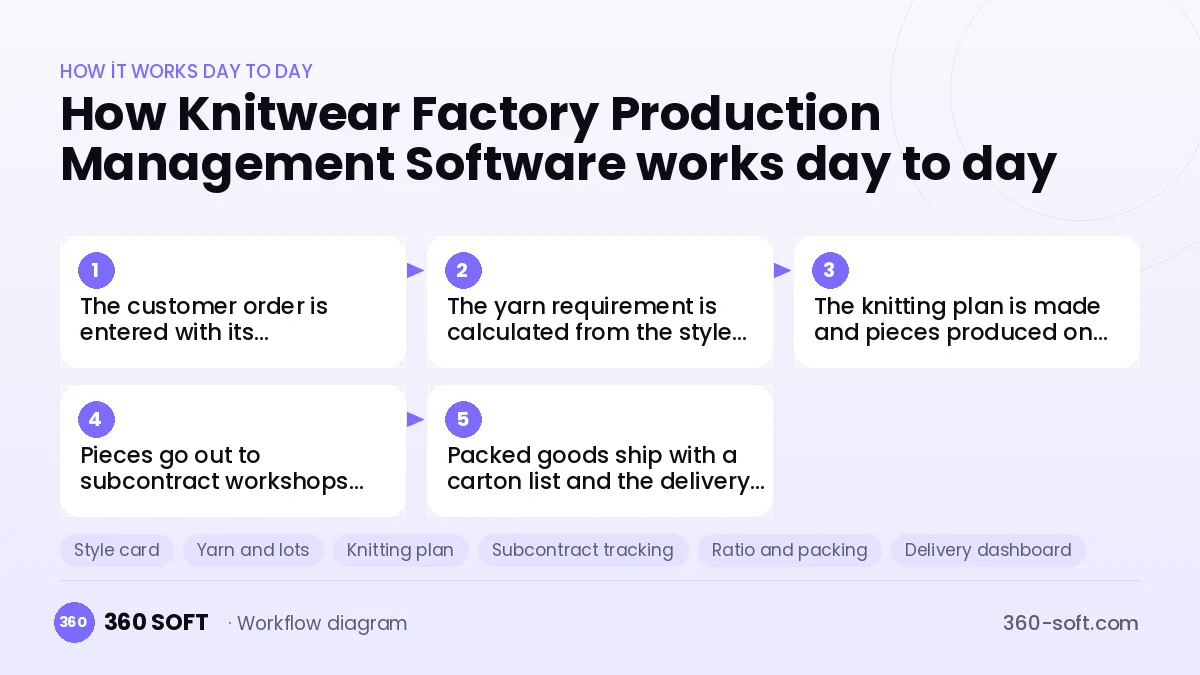
- 1
The customer order is entered with its size-colour ratio.
- 2
The yarn requirement is calculated from the style card and the lot is reserved.
- 3
The knitting plan is made and pieces produced on the machines are scanned.
- 4
Pieces go out to subcontract workshops and quantity and waste are recorded on return.
- 5
Packed goods ship with a carton list and the delivery report closes.
Integrations
Off-the-shelf software or custom-built?
When off-the-shelf is enough
For small businesses producing a limited collection under their own brand, a ready-made ERP with a textile module may be enough.
When custom software pays off
For export-oriented factories running many subcontract workshops and machines, a custom system joining yarn, machine planning and subcontract tracking prevents delivery and waste losses.
How the budget is built
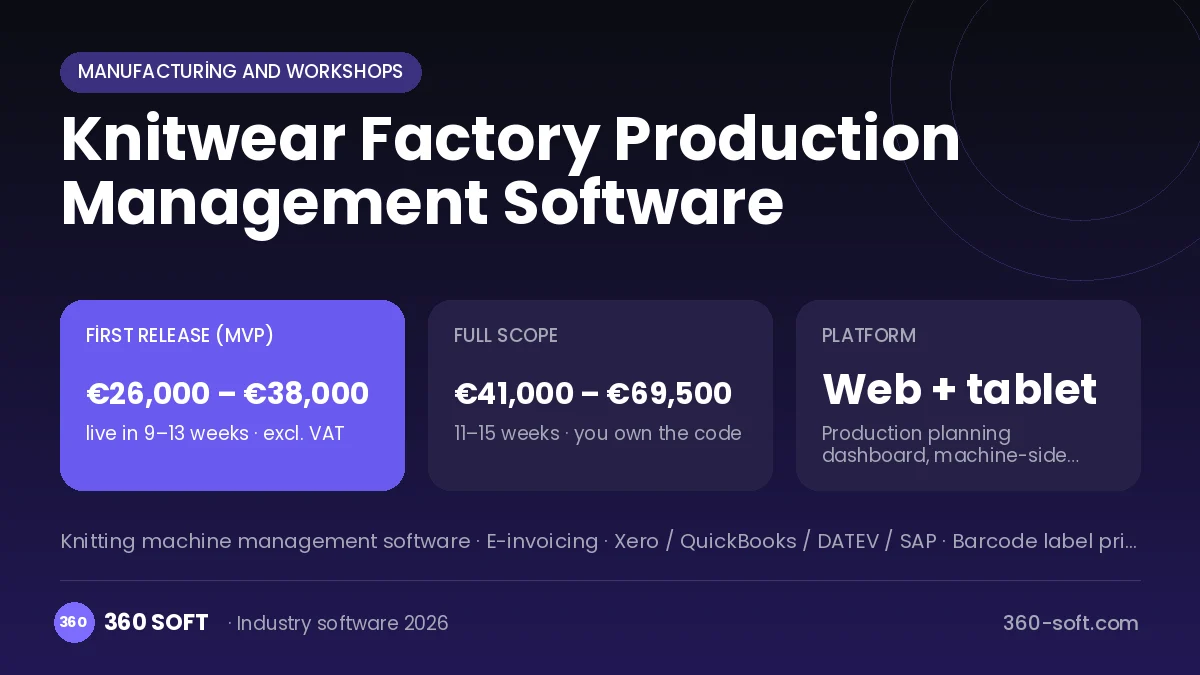
We launch the workflow that saves you the most time first, then add modules based on real usage. The full scope below is calculated with 22 screens and 9 modules; the final price follows a free discovery call and a written scope.
Maintenance and improvements (optional): €550 / month. Hosting, SMS, WhatsApp and app store fees are listed separately.
Frequently asked questions
Can subcontract workshops access the system?
Yes. Each workshop sees only the jobs sent to it and enters delivery and waste records from its own screen.
Is it suitable for circular knitting too?
Yes. A circular knitting flow is also set up, with fabric-based roll and kilogram tracking.
Can customer measurement charts be stored?
Yes. The style card holds a measurement chart by size, sample approval and revision history.
Do we have to give up our current ERP?
No. Accounting and finance stay in the ERP and production and subcontract data are passed over by integration.