In second-hand trading every item is one of a kind: its purchase price, condition and source are specific to it. If photos of the items and the seller’s details are not recorded when buying at the seller’s home, both the profit calculation and legal responsibility are at risk. Items sit in the warehouse for months and nobody knows how long each has been unsold.
In the system we build, the buying team photographs the item and appraises it against a checklist, then creates a purchase receipt with the seller’s ID details. The item enters stock with a unique code, is priced and listed in the store and on marketplaces from one place, and a markdown is suggested according to time on hand.

Problems second-hand businesses face
- Missing seller details and purchase receipts for items bought
- Profit per item being impossible to calculate
- Items that have not sold for a long time going unnoticed
- Marketplace listings not matching stock
What the system includes
Appraisal
Checklist by product type, defect notes and photos.
Purchase record
Seller ID details, purchase receipt and payment record.
Single-item stock
A unique code per item, with purchase cost, repair and cleaning cost and location.
Pricing
Price suggestions based on similar past sales, and time-based markdowns.
Listing management
Web storefront and marketplace listings synced with stock.
Consignment sales
Items left on commission, seller share and settlement.
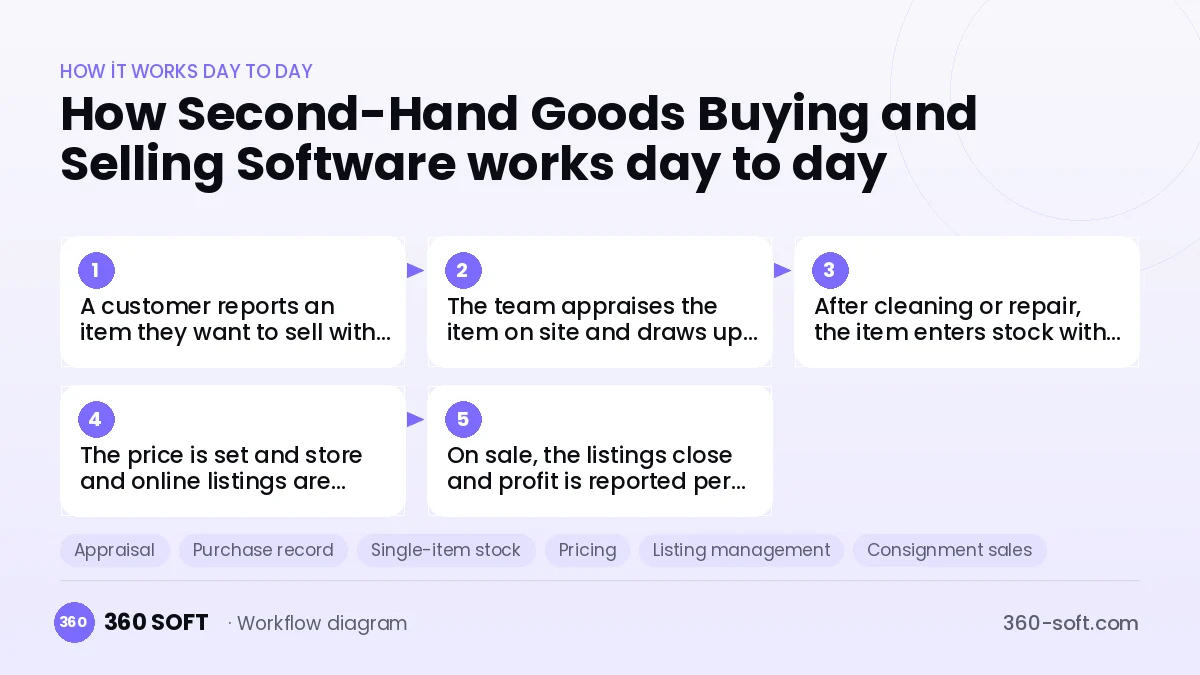
How it works day to day
- 1
A customer reports an item they want to sell with photos and receives a preliminary offer.
- 2
The team appraises the item on site and draws up the purchase receipt.
- 3
After cleaning or repair, the item enters stock with its unique code.
- 4
The price is set and store and online listings are opened.
- 5
On sale, the listings close and profit is reported per item.
Integrations
Off-the-shelf software or custom-built?
When off-the-shelf is enough
For a dealer with few items who sells only in the shop, a simple stock book is enough.
When custom software pays off
For businesses with a home-buying team, multichannel sales and a consignment model, a custom system that automates single-item tracking makes the capital sitting in stock visible.
How the budget is built
We launch the workflow that saves you the most time first, then add modules based on real usage. The full scope below is calculated with 18 screens and 10 modules; the final price follows a free discovery call and a written scope.
Maintenance and improvements (optional): €500 / month. Hosting, SMS, WhatsApp and app store fees are listed separately.
Frequently asked questions
Can the seller’s identity be verified?
ID details are verified and recorded at purchase, and the purchase receipt is generated automatically.
Which marketplaces can listings be posted to?
Integrations are built with marketplaces and listing platforms that offer an API; scope is agreed during discovery.
Are repair and cleaning costs added to cost?
Yes. Expenses added to an item are included in its purchase cost and carried into the profit calculation.
How is sellers’ personal data stored?
ID and contact details are kept encrypted and only authorised staff can access them; a retention period is defined under GDPR.