In a foundry, quality is decided at the furnace: the ratio of scrap, pig iron and ferro-alloys in the charge, the pouring temperature and the spectrometer result. When that data stays in a furnace logbook, finding which heat and which moulding sand a customer’s porous or cracked casting came from can take days. In the system we build, every melt opens under a heat number with material weights, temperature and spectrometer analysis recorded. Moulding, pouring, fettling and machining steps are tied to the batch number, and scrap rate by defect type and a customer quality report are one click away.
Problems we see in foundries
- Charge and analysis records that stay in a logbook
- No way to trace a defective casting back to its pour
- The true scrap and rework rate being unknown
- Pattern and core stock that nobody can keep track of
What the system includes
Melting and charge
Charge recipe per furnace, actual weighings, temperature and energy.
Spectro analysis
Chemical composition results, tolerance checks and correction additions.
Moulding plan
Daily moulding schedule based on pattern, core and flask requirements.
Batch traceability
Links between casting, pour batch, heat and sand records.
Defects and scrap
Rejection analysis by type such as porosity, cold shut and sand inclusion.
Quality documents
Material certificates and inspection reports generated for the customer.
How it works day to day
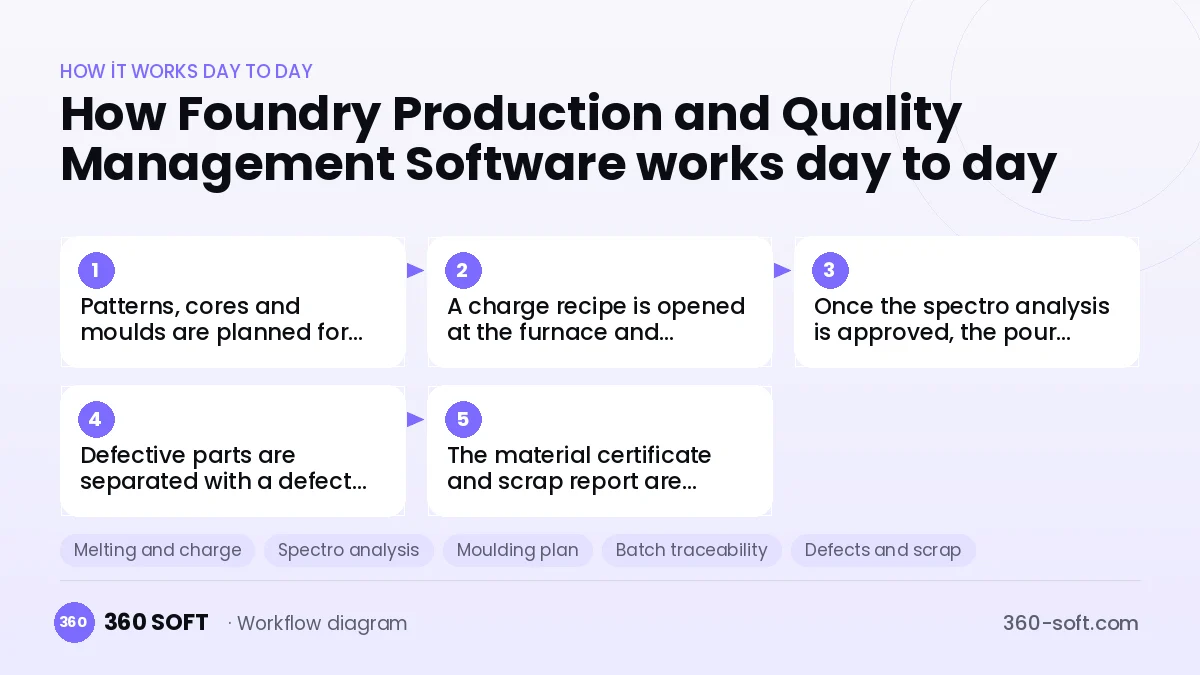
- 1
Patterns, cores and moulds are planned for the order.
- 2
A charge recipe is opened at the furnace and weights and temperature are entered.
- 3
Once the spectro analysis is approved, the pour batch is created.
- 4
Defective parts are separated with a defect code at fettling and inspection.
- 5
The material certificate and scrap report are prepared with the shipment.
Integrations
Off-the-shelf software or custom-built?
When off-the-shelf is enough
For a small foundry with a single furnace and standard parts, an ERP with a general production module may be enough.
When custom software pays off
Foundries supplying traceable castings to automotive and machinery customers, who must open charge and analysis records to customer audits, see a custom system pay for itself quickly.
How the budget is built
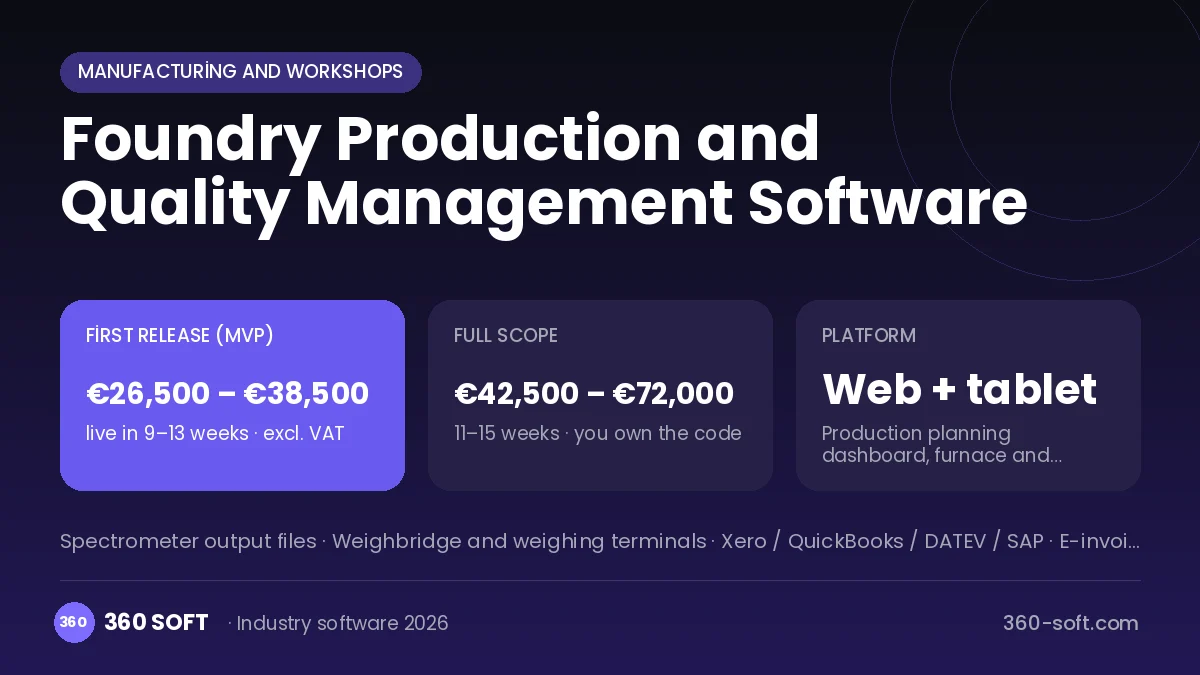
We launch the workflow that saves you the most time first, then add modules based on real usage. The full scope below is calculated with 22 screens and 9 modules; the final price follows a free discovery call and a written scope.
Maintenance and improvements (optional): €550 / month. Hosting, SMS, WhatsApp and app store fees are listed separately.
Frequently asked questions
Can spectrometer results be imported automatically?
If the instrument provides a file or network output, results are linked to the heat automatically; otherwise they are entered quickly on a tablet.
Does it help with IATF 16949 audits?
Traceability, defect records and corrective actions provide the records auditors ask for, and your procedures are adapted into the system.
What happens if the internet drops at the furnace?
The tablet screen holds data through short connection losses and sends it to the server when the connection returns.
Can we bring in our historical charge records?
Analysis and charge history kept in Excel can be imported so older batches are traceable too.