Mobile appHealth, fitness & wellness
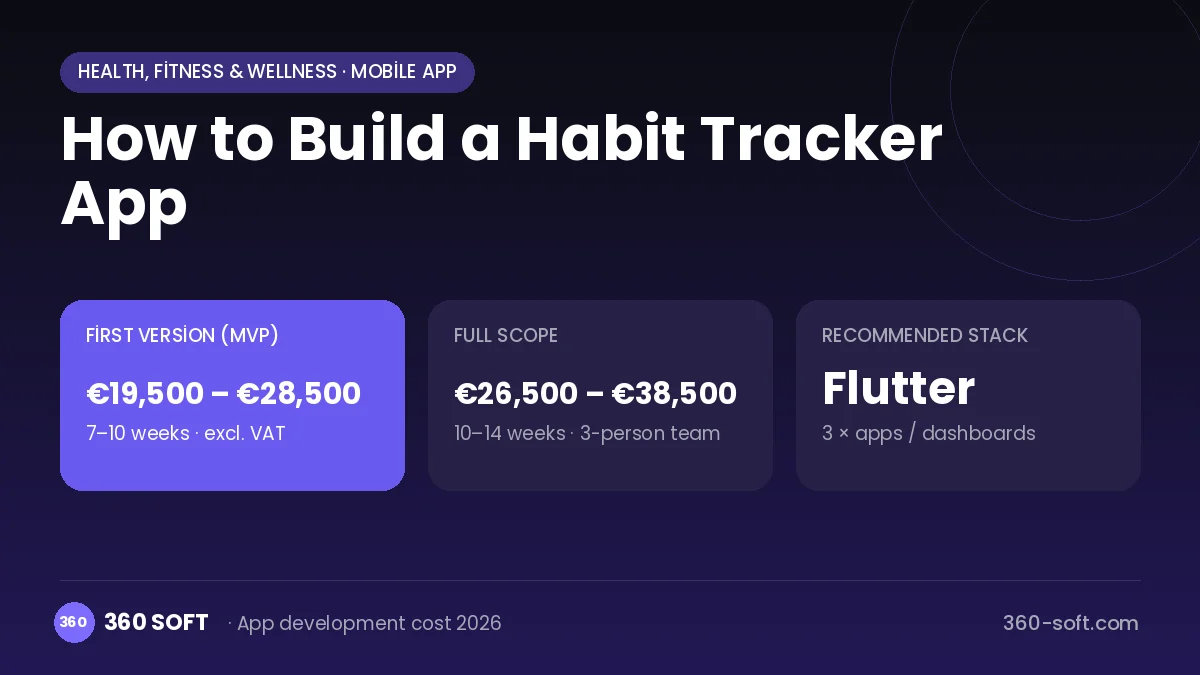
Habit apps succeed by turning a small action into visible progress. A box ticked each day, a streak you do not want to break and, in Habitica-style products, game elements such as character levels, rewards and party quests keep motivation alive. To stop users from quitting, the timing of reminders, forgiveness for a missed day and social accountability all play a critical role.
Building something similar means designing a mobile app, a gamification engine and a notification infrastructure together. Habit, task and daily-goal types, flexible frequency rules, streak calculation, a points and level system, friend and group challenges and statistics screens form the core. The backend adds subscription management, syncing of offline entries and a panel for managing content and events.
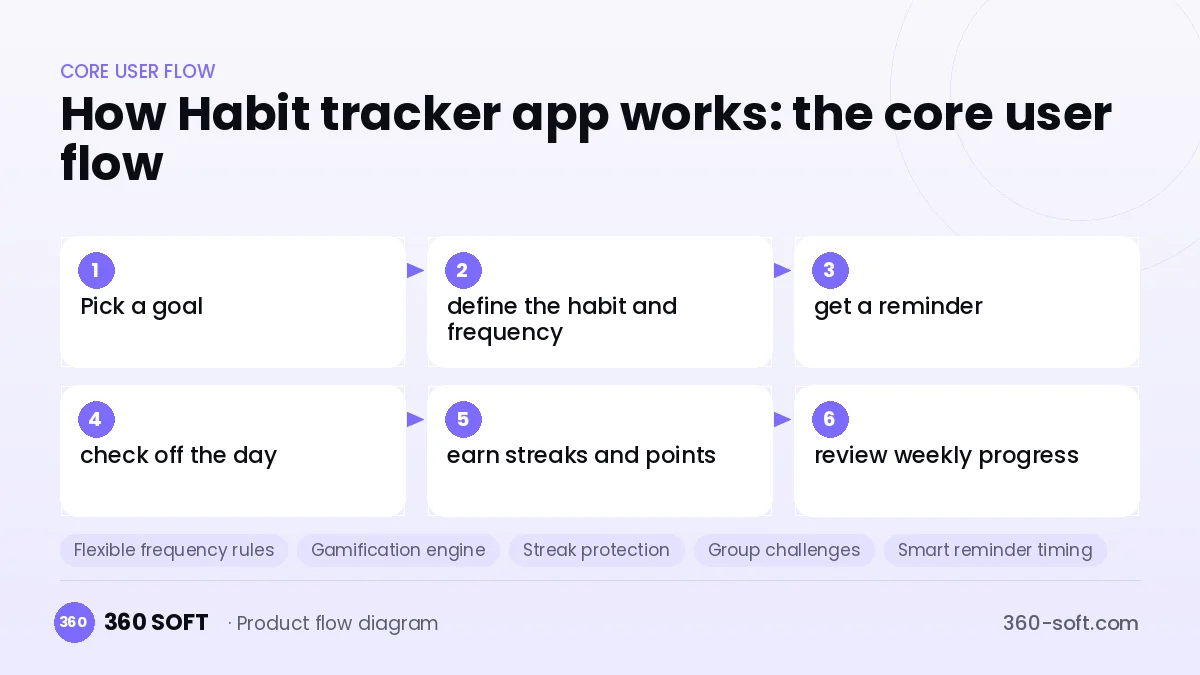
How Habit tracker app works: the core user flow
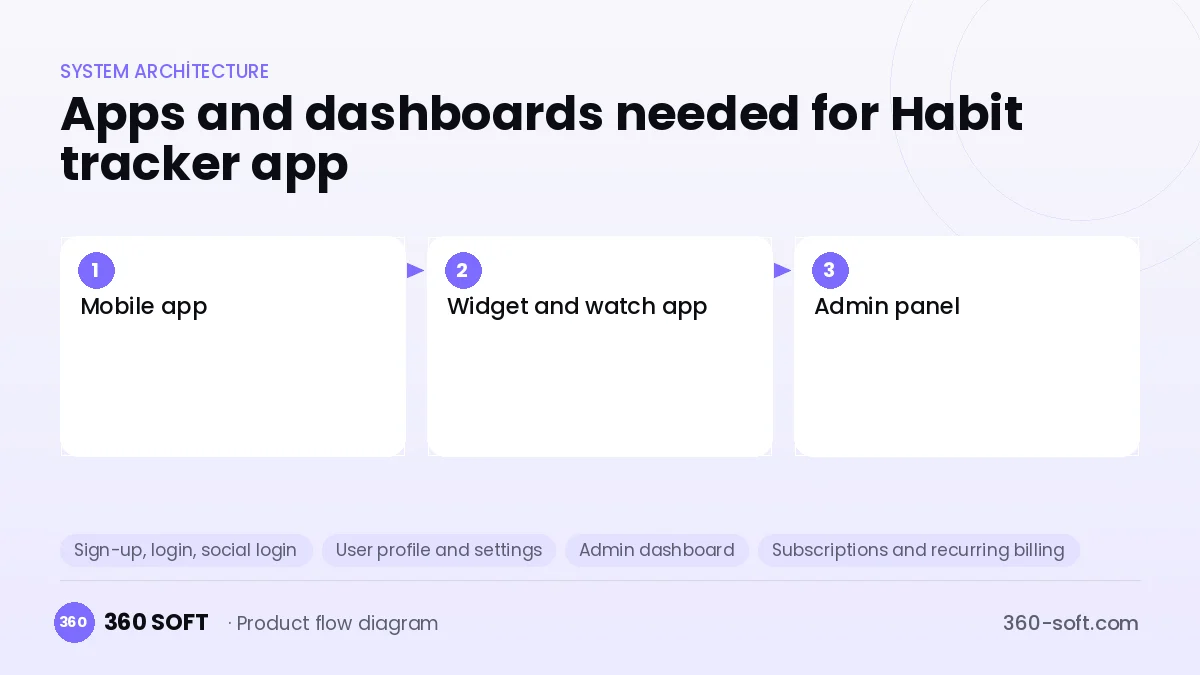
How many apps and dashboards do you need?
Mobile app
The main app where users define habits, check them off every day and follow their progress in charts.
Widget and watch app
Extensions that let users check off a habit with one tap from the home screen or a smartwatch without opening the app.
Admin panel
A panel for managing ready-made habit templates, badges, group challenges and subscription campaigns.
Critical features of a product like Habit tracker app
Flexible frequency rules
Goals such as three days a week, every other day or weekdays only can be defined, and streaks are calculated according to those rules.
Gamification engine
Completed habits earn points, levels and rewards, while missed ones show up as small penalties on the character.
Streak protection
Users can freeze a streak for illness or holidays, or make up a single day with an earned allowance, which prevents drop-off.
Group challenges
Friends join a shared goal together, see each other's progress and share party quests.
Smart reminder timing
Notification times adapt to when the user usually checks in, which prevents a pile-up of unnecessary alerts.
Progress analytics
Heat maps, weekly success rates and insights such as the hardest days help users understand their own behaviour.
What goes into the first version, what comes later
First version (MVP)
- Habit creation with flexible frequency
- Daily check-ins and streak calculation
- Reminder notifications
- Basic statistics and a calendar heat map
- Premium subscription and a home-screen widget
Later releases
- Character, level and reward system
- Friend and group challenges
- Smartwatch and health app integration
- AI-powered personal habit suggestions
Modules and how the budget is calculated
The budget is calculated with 360 SOFT’s pricing model from the modules below, about 18 screens and the project’s complexity: roughly 102 person-days for the full scope and 74 person-days for the first version. Every module you drop lowers the budget directly.
| Module | Phase |
|---|---|
| Sign-up, login, social login | First version |
| User profile and settings | First version |
| Admin dashboard | First version |
| Subscriptions and recurring billing | First version |
| Push notifications | First version |
| Email / SMS notifications | First version |
| Offline mode and sync | First version |
| Reporting and analytics | Later release |
| In-game economy / LiveOps | Later release |
Hosting, SMS, map APIs, app store accounts and payment-provider fees are separate items. Maintenance and improvements (optional): €350 / month. We send a fixed written price within 24 hours after a free discovery call.
The hard parts
Retention
Usage drops quickly after the first week, so onboarding, notification tone and the balance of rewards must be tuned continuously with A/B tests.
Time zones and day boundaries
Checking in after midnight, or a day change while travelling, can break streaks by mistake.
Game economy balance
If points and rewards are too easy to earn they lose meaning; if too hard they tire the user, so the economy has to be modelled carefully.
Business model
Freemium subscriptions stand out in this category: a limited number of habits is free, while unlimited tracking, advanced statistics, themes and group features come with a premium plan. In gamified products, cosmetic items and character looks can be sold as in-app purchases. Bulk licences sold to companies for corporate wellness programmes are another revenue channel.
Get a free quote for your project
Let us scope it together and send a fixed written quote within 24 hours. NDA on request; you own the source code.
Choosing a company to build an app like Habit tracker app
Most people searching “build a habit tracker app” are really looking for a reliable app development company. When comparing quotes, check four things:
- Can you try similar products they have shipped, in the stores or live?
- Are the source code, design files, servers and store accounts transferred to you by contract?
- Do they show a working demo every two weeks, with written scope and acceptance criteria?
- Are maintenance, scaling and GDPR/security costs written into the quote?
Copyright and trademarks
A business model and features are generally not protected on their own, but the Habit tracker app name, logo, interface design, content and source code are. That is why we build a product with similar functionality but your own brand, design and code. This is not legal advice; we recommend a trademark search before launch.
Frequently asked questions
How long does it take to build a habit tracker app?
A simple first version with tracking, streaks and reminders can go live in a relatively short time. Gamification, social features and a watch app add development and testing time.
How many separate apps do we need?
In most cases a single mobile app plus a simple panel for managing content and campaigns is enough. Widgets and smartwatch extensions are built as part of the same project.
Will there be copyright or trademark issues?
The idea of habit tracking and gamification is free to use, but another product's name, character artwork, interface design, copy and code cannot be copied. This is general information, not legal advice.
What should I look for when choosing a company to build a habit app?
Look for a team that thinks about product design and behavioural psychology and can measure retention metrics. Experience with subscription infrastructure and store release processes also matters.