Mobile appMobility, ride-hailing & carsOriginal by Neutron Holdings (Lime)
Lime is one of the brands that turned shared e-scooters and bikes into a multi-country urban transport network. The promise to users is getting to a transit stop or covering a short distance quickly without a car. Partnerships with cities, data sharing and safe riding rules are the basic conditions for this kind of platform to stay in cities for the long term.
Building something similar requires a rider app, field operations tools and a fleet management panel. The backend processes location and battery data from thousands of vehicles, pushes zone rules to the vehicles and produces reports in the formats cities require. A multilingual interface, multiple currencies and age and licence rules that vary by country must also be taken into account.
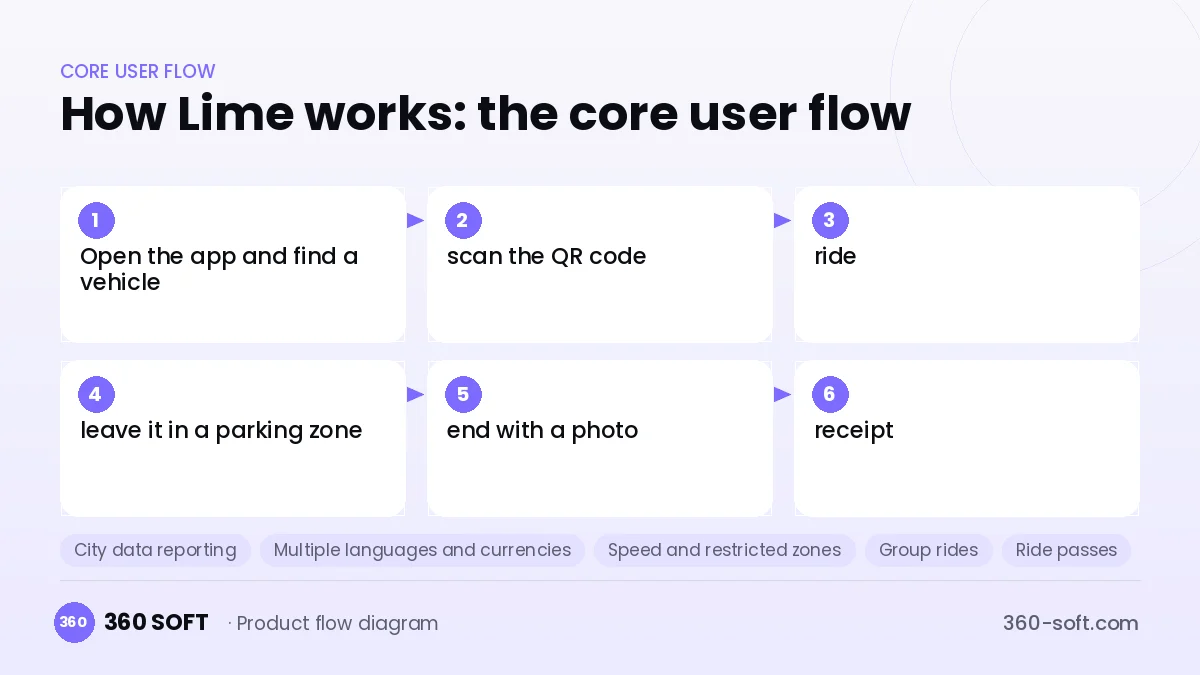
How Lime works: the core user flow
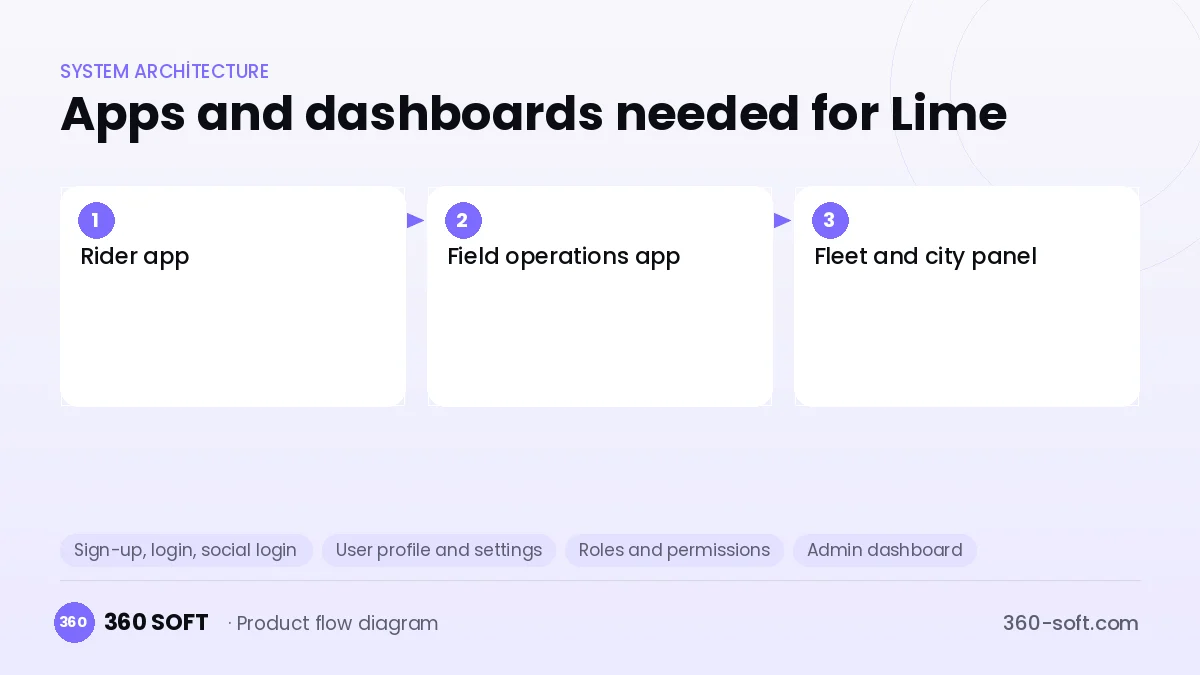
How many apps and dashboards do you need?
Rider app
Users find and rent vehicles, buy passes and view their ride history.
Field operations app
Charging, maintenance and rebalancing crews pick up tasks.
Fleet and city panel
The panel for managing vehicle status, zones, city reports and prices.
Critical features of a product like Lime
City data reporting
Exports vehicle distribution, ride counts and parking violations in the standard formats city authorities ask for.
Multiple languages and currencies
The same app runs in different countries with local language, currency and tax rules.
Speed and restricted zones
Pushes slow-down areas in busy pedestrian zones, no-parking and no-riding areas to vehicles instantly.
Group rides
Renting several vehicles from one account to ride together with friends.
Ride passes
Prepaid passes for a set number of minutes or days that waive the unlock fee.
Safe riding training
A short training flow and rules quiz on first use, with account restrictions for repeated violations.
What goes into the first version, what comes later
First version (MVP)
- Sign-up, age check and card setup
- Map, vehicle search and QR-code rental
- Per-minute fares and ending rides with a photo
- Zone rules and speed limit management
- Panel for fleet, charging tasks and reporting
Later releases
- Group rides and shared accounts
- Support for multiple countries, languages and currencies
- City API integrations
- Joint journey planning with public transport apps
Modules and how the budget is calculated
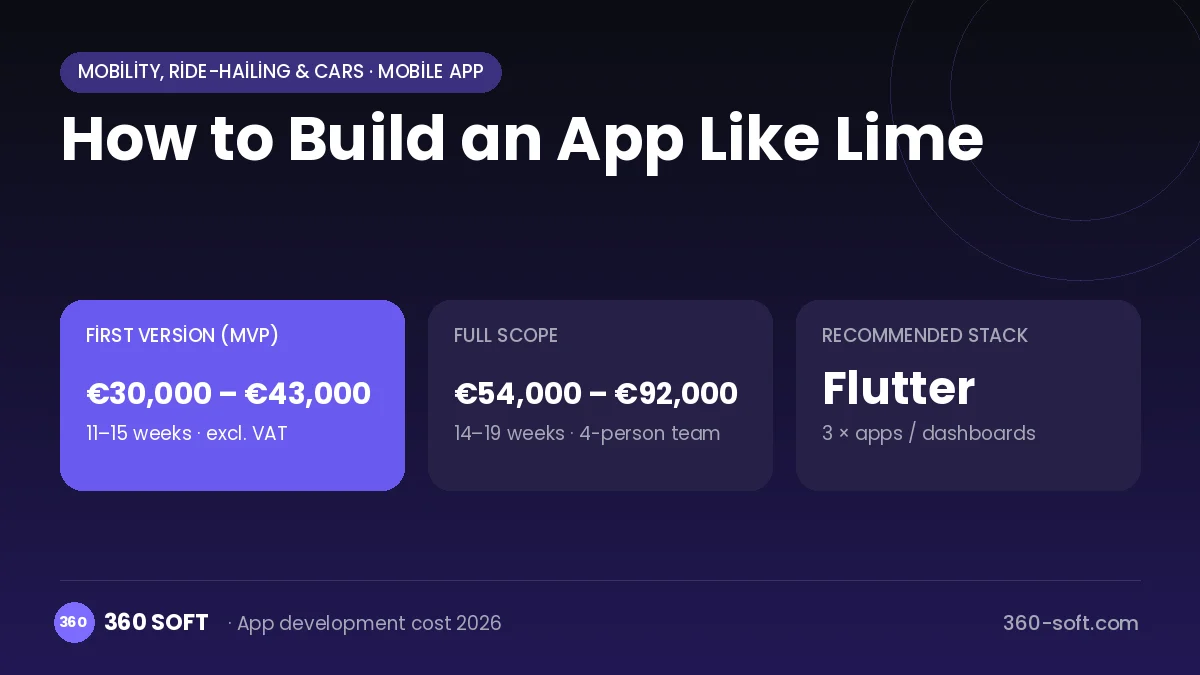
The budget is calculated with 360 SOFT’s pricing model from the modules below, about 30 screens and the project’s complexity: roughly 207 person-days for the full scope and 114 person-days for the first version. Every module you drop lowers the budget directly.
| Module | Phase |
|---|---|
| Sign-up, login, social login | First version |
| User profile and settings | First version |
| Roles and permissions | First version |
| Admin dashboard | First version |
| Online payments (Stripe / PSP) | First version |
| Subscriptions and recurring billing | First version |
| Maps, location, routing | First version |
| IoT device and sensor integration | Later release |
| Barcode / RFID / handheld | Later release |
| Push notifications | First version |
| Reporting and analytics | Later release |
| Multi-language | First version |
| Third-party API integration | First version |
Hosting, SMS, map APIs, app store accounts and payment-provider fees are separate items. Maintenance and improvements (optional): €700 / month. We send a fixed written price within 24 hours after a free discovery call.
The hard parts
City relations and compliance
Every city has different rules on fleet size, parking and speed; the system must apply and report on these rules flexibly.
Fleet efficiency
Demand forecasting and field task optimisation are critical to keeping vehicles charged and in the right place.
Hardware lifecycle
Maintenance, faults and software updates for vehicles and IoT modules must be managed remotely.
Business model
Revenue consists of unlock fees and per-minute usage charges; ride passes and subscriptions for frequent users bring revenue stability. Service agreements won through city and university tenders, corporate employee programmes and advertising space on vehicles stand out as complementary revenue sources that offset fleet costs.
Get a free quote for your project
Let us scope it together and send a fixed written quote within 24 hours. NDA on request; you own the source code.
Choosing a company to build an app like Lime
Most people searching “build an app like lime” are really looking for a reliable app development company. When comparing quotes, check four things:
- Can you try similar products they have shipped, in the stores or live?
- Are the source code, design files, servers and store accounts transferred to you by contract?
- Do they show a working demo every two weeks, with written scope and acceptance criteria?
- Are maintenance, scaling and GDPR/security costs written into the quote?
Copyright and trademarks
A business model and features are generally not protected on their own, but the Lime name, logo, interface design, content and source code are. That is why we build a product with similar functionality but your own brand, design and code. This is not legal advice; we recommend a trademark search before launch.
Frequently asked questions
How long does it take to build an app like Lime?
A first version launching in one city can be ready in a few months. Multiple countries, languages and city integrations are added gradually in later phases.
How many separate applications are needed?
A rider app, a field operations app and a fleet management panel are the core trio. A separate reporting screen or API for cities may also be needed.
Are there copyright or trademark issues?
The micromobility business model is free to use; the Lime name, logo, colour identity, design and code may not be copied. This information is not legal advice.
Which IoT infrastructure should I choose?
The module and protocol offered by the vehicle manufacturer are decisive. Building the backend with an abstraction layer that supports multiple module types makes it easier to switch suppliers later.